

If you have ever noticed someone wearing metal brackets and wires across their teeth, you might have asked yourself how such a setup can actually move teeth that are deeply rooted in bone.
At first glance, it seems puzzling that these tiny devices could shift something as strong as a tooth. But the process is rooted in biology, patience, and steady pressure.
The method orthodontists use is both scientific and safe, which is why so many people choose braces when they want a healthier smile.
In fact, in cities like Bangalore, orthodontic care is becoming increasingly common because more people are paying attention to the health and appearance of their teeth. This article explains, step by step, how teeth move during orthodontic treatment.
From the basics of tooth structure to the science of bone remodeling, and from the role of brackets and wires to the daily life of a patient in treatment, we’ll break everything down in a simple way that anyone can understand.
The Basics of Tooth Movement
Teeth may seem like they are firmly cemented in place, but in reality, they are not locked into the jawbone like nails hammered into wood. Instead, every tooth sits inside a socket.
Between the root of the tooth and the surrounding bone is a soft yet vital layer of tissue called the periodontal ligament. This ligament acts like a cushion, absorbing chewing forces and keeping the tooth stable.
What makes this ligament remarkable is its ability to sense and respond to pressure. When steady force is applied to a tooth, the ligament signals the body to make changes in the bone. On the side where pressure is applied, bone tissue starts breaking down.
On the opposite side, a new bone begins forming. This is the natural biological process that allows teeth to shift position gradually over time.It is this very process that modern orthodontic treatments, such as Transparent Smile Correctors, make use of.
By applying gentle, consistent pressure, these clear aligners guide the teeth into better positions while working in harmony with the periodontal ligament and natural bone remodeling.Without this ligament and the body’s ability to remodel bone, moving teeth would not be possible.
How Braces Apply Gentle Pressure
Orthodontic treatment relies on the principle of applying consistent, gentle force to teeth so they can slowly shift into the correct position. Braces are not a single device but rather a system of small parts that work together.
The main components are brackets, wires, and sometimes elastic bands or springs. Each of these plays a special role in guiding the teeth.
Over time, the combined pressure from these parts reshapes the bone around the teeth, allowing them to settle into new, healthier positions.
The process is carefully monitored and adjusted by the orthodontist to keep things moving in the right direction.
The Role of Brackets
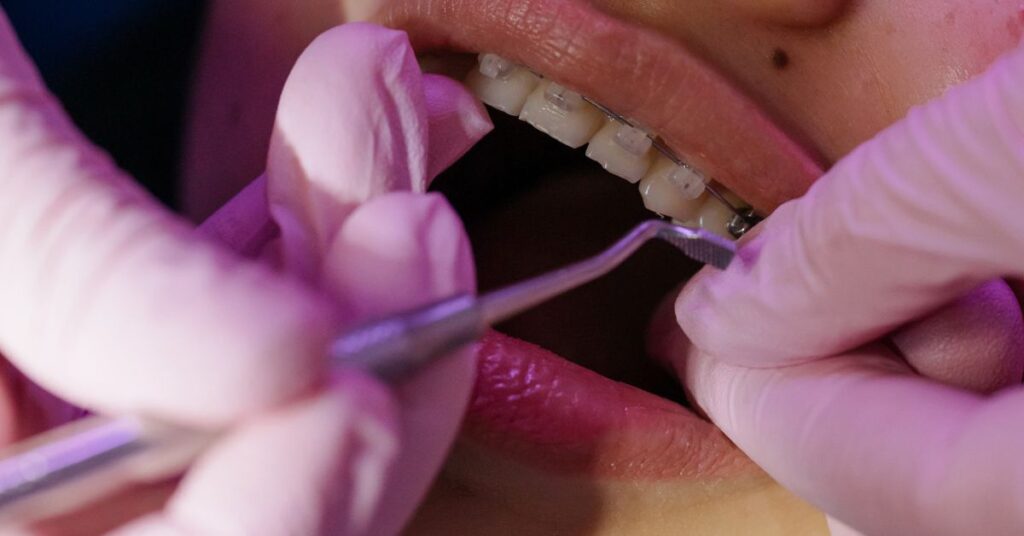
Brackets are the small squares bonded directly to the surface of each tooth. Think of them as the handles that allow the orthodontist to guide movement. They can be made of stainless steel, ceramic, or clear materials depending on the patient’s preference.
Each bracket has a tiny slot where the archwire fits. By placing brackets at specific angles and positions on each tooth, orthodontists control the direction and amount of pressure applied. This means a tooth can be rotated, tilted, or moved forward or backward, depending on the needs of the treatment plan.
The Role of Archwires
While brackets are the handles, the archwire is the driver. The archwire connects all the brackets, creating a system where force is evenly distributed across the teeth. The wire naturally wants to return to its original shape, and as it does so, it applies tension that gradually moves the teeth.
At each appointment, the orthodontist makes small changes to the wire or replaces it with one of a different thickness. These adjustments keep the process going, ensuring that the teeth continue shifting in the planned direction. While patients may feel slight soreness after adjustments, this is simply a sign that the teeth are responding to the gentle pressure.
The Science of Bone Remodeling
The real transformation happens not in the teeth themselves but in the bone around them. When consistent force is applied, the body responds by reshaping the bone in a process called bone remodeling.
Imagine a fence post stuck in soft soil. If you apply pressure to one side, the soil loosens there, and space opens up on the opposite side.
The post can now move slightly in the direction of the push. In the mouth, the bone acts like the soil, reshaping to allow the tooth to slide into a new position.
The Role of Cells in Movement
Bone remodeling happens thanks to two types of specialized cells. Osteoclasts break down bone tissue where pressure is applied, making space for the tooth to move. On the opposite side, osteoblasts build new bone, securing the tooth in its new spot.
This balance between bone breakdown and bone building is what allows orthodontic treatment to be safe, controlled, and long-lasting. Without both processes working together, teeth would either not move at all or they would become unstable.
Stages of Orthodontic Treatment
Moving teeth is not a single event but a journey that happens in several stages. Each stage plays an important role in achieving the final result: a straight, balanced, and healthy smile.
Initial Alignment
The first stage focuses on straightening teeth that are crooked, rotated, or crowded. Patients often notice visible changes early on, as teeth begin to look more even. Some soreness or tightness is common in this phase, but it usually fades as the teeth adapt.
Correcting Bite Issues
Once the teeth are better aligned, the next step is correcting how the upper and lower teeth meet. This is important not just for looks but also for chewing and long-term health.
Issues like overbites, underbites, or gaps between teeth are addressed here. Orthodontists may use elastics or springs during this stage to help adjust the bite.
Finishing and Retention
The final stage focuses on perfecting the results. Small adjustments are made to improve the bite and fine-tune the positioning of the teeth.
Once the braces are removed, retainers are used to hold the teeth in place. Retainers are essential because teeth naturally want to shift back to their old positions without support.
Factors That Influence Tooth Movement
Not all patients experience the same speed or ease of tooth movement. Several factors influence how treatment progresses.One important factor is age.
Younger patients often see faster results because their bones are still growing and respond more quickly to pressure. Adults can achieve excellent results too, but the process may take a bit longer.
Another factor is oral health. Healthy gums and strong bones provide the best foundation for tooth movement. If gum disease or bone loss is present, it can slow down progress or require extra care.
Finally, consistency is critical. Following the orthodontist’s instructions, wearing elastics if prescribed, and attending regular appointments all contribute to a smoother and faster treatment. Missing steps can delay progress and extend the total treatment time.
Why Patience Is Key
One of the most important things to understand about orthodontic treatment is that it takes time. Teeth move slowly because rushing the process could harm the gums, roots, or bone. On average, treatment lasts between 18 months and three years depending on the complexity of the case.
Patience is essential because orthodontists move teeth in small, controlled steps to keep the mouth healthy. The wait may feel long, but the reward is a healthier bite and a smile that can last for life.
Braces in Bangalore and Beyond
In places like Bangalore, more and more people are choosing orthodontic care because of greater awareness of dental health and the availability of advanced treatment options.
Modern clinics in such cities provide patients with choices ranging from traditional metal brackets to ceramic systems and even clear aligners.
The growing demand reflects how people value both health and confidence in their appearance. For many, investing in orthodontic care is seen as an important step toward improving their overall well-being.
Daily Life During Treatment
Life with braces involves some adjustments, but most patients adapt quickly. Eating certain foods requires care. Hard candies, sticky treats, and crunchy snacks are usually avoided because they can damage the brackets or wires.
Cleaning the teeth also becomes more important during treatment. Brushing and flossing carefully around the brackets help keep gums healthy and prevent cavities.
Many patients use special brushes or flossing tools to make the job easier.Regular checkups are another key part of life during treatment.
At each visit, the orthodontist adjusts the wires or brackets to keep the teeth moving. These visits are short but essential, as each adjustment brings the patient closer to the final result.
Conclusion
Orthodontic treatment works because gentle, steady pressure triggers the body to remodel the bone around the teeth. Over time, this allows teeth to move into healthier positions, guided by brackets and wires that apply controlled force.
While the process takes patience and consistency, the results can be life-changing: a balanced bite and a confident smile.
For anyone considering orthodontic care, trusted providers like Teeth Aligners in India offer modern solutions and expert guidance to make the journey smooth and effective.
